
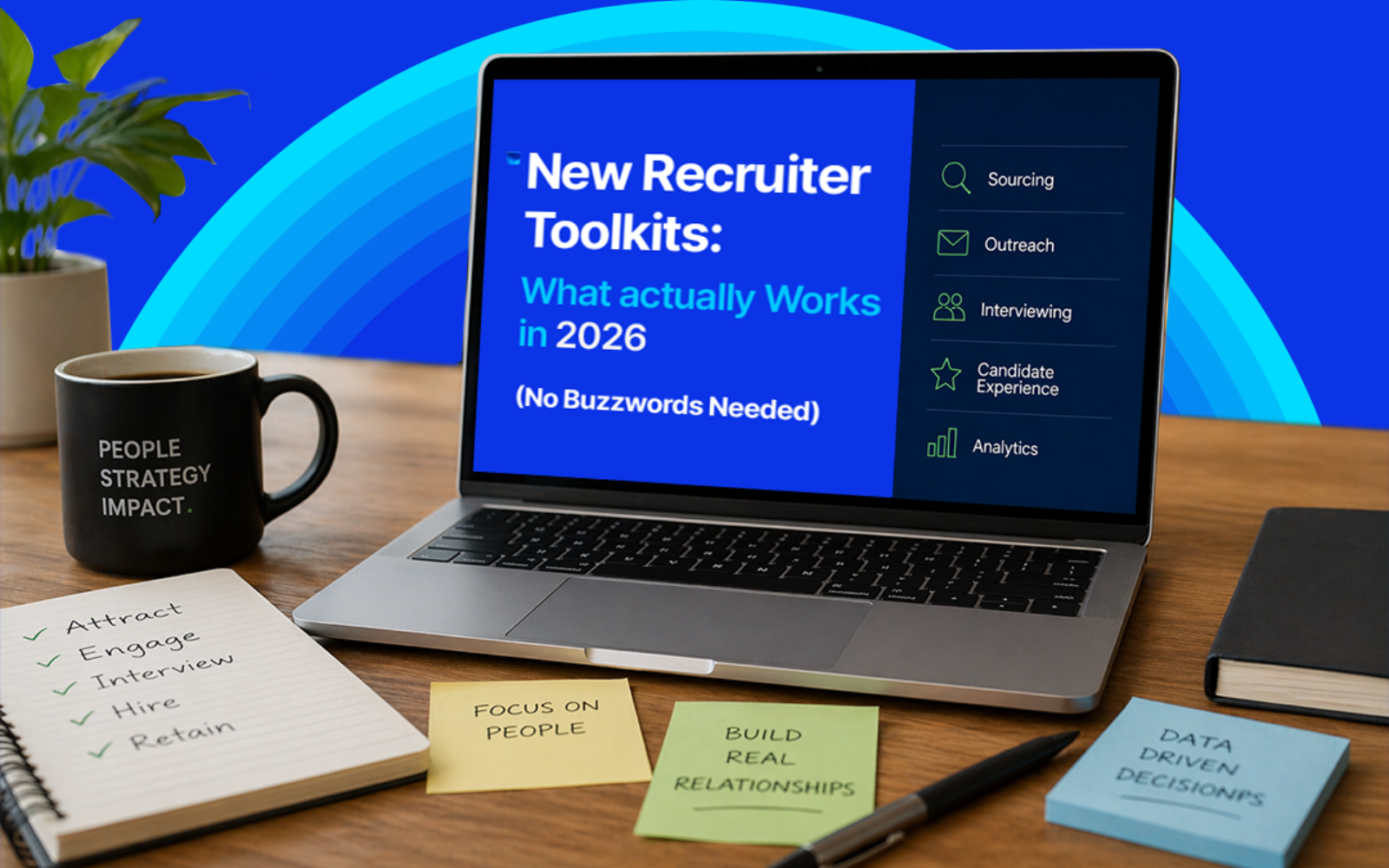
We deserve better than buzzwords. So let us talk about what actually works.
This is not a listicle where I just tell you to "leverage data-driven insights" and then leave you with zero context on what that even means in practice. No, bestie. This is a real conversation about the bpo recruitment tools, the workflows, the habits, and the platforms that Filipino recruiters are actually using to hit their numbers in 2025 — without losing their minds in the process.
I am going to be a little tough on you today. But only because I believe in you. Tara na.
Before we talk about tools, let us do a quick reality check.
Picture this: It is Monday morning. You have three open requisitions that were supposed to be filled last week. Your hiring manager is sending you follow-up messages with increasing urgency. Your candidate pipeline looks like a ghost town. And you are sitting there, staring at your screen, wondering if maybe you should just post on Facebook Marketplace and hope for the best.
Sound familiar? Because I have been there, and so has every recruiter I know.
The problem is not that you are bad at your job. The problem is that the way most recruiters work in the Philippines has not evolved as fast as the hiring landscape has. We are still using 2019 methods in a 2025 world, and it shows. Job boards have exploded. Candidates are more selective. The BPO industry specifically is experiencing a very particular kind of chaos — high volume demand, high turnover, and a shrinking pool of applicants who actually show up for their interview.
So before you add another tool to your already cluttered browser bookmarks, ask yourself: What part of my recruitment process is actually failing me? Is it sourcing? Is it screening? Is it candidate drop-off? Is it onboarding? Because the answer to that question determines which tools you actually need.
If you are not sure, I would recommend reading How to Streamline Your Recruitment Process to Hire Faster — it is a good starting point for identifying where your bottlenecks actually live before you start throwing solutions at the wall.
Okay, so let us start with the most foundational piece of your recruitment toolkit: the job posting itself.
I know, I know. You have been writing job posts for years. You could do it in your sleep. But here is the thing — most job posts in the Philippine BPO space are genuinely terrible, and they are terrible in very specific, very fixable ways.
The most common mistake I see is what I call the "copy-paste corporate template" problem. You take a job description that was written in 2018 for a US-based company, strip out the location, slap your logo on it, and call it a day. And then you wonder why the only people applying are either wildly unqualified or clearly just mass-applying to everything on the platform.
Your job post is not just an announcement. It is your first impression. It is marketing. It is the thing that makes a fresh graduate in Caloocan decide whether your company is worth two hours of their commute time. And right now, a lot of your job posts are giving "this company does not actually care about the people who work here" energy. I say that with love.
Specific things to fix right now:
First, stop writing job descriptions that read like legal documents. "Must possess a minimum of two years of demonstrated experience in customer-facing roles with excellent verbal and written communication skills" — babe, no. Say it like a human being. "You are someone who genuinely likes talking to people and can stay calm when a customer is upset." Same meaning, completely different vibe.
Second, stop hiding the salary. I understand there are reasons companies are hesitant to list exact compensation, but in 2025, candidates are not going to waste their time interviewing for a role that pays below their expectations. The Philippines has one of the most competitive BPO talent markets in Southeast Asia. If you want good people, you need to be upfront about what you are offering. Check out these 5 Perks that Metro Manila Job Seekers Love — and then actually include those perks prominently in your postings, not buried in the last paragraph.
Third, be specific about growth. Filipino candidates are not just looking for a paycheck. They want to know that there is somewhere to go. If you are not already promoting career growth in your job listings, you are leaving talent on the table. I mean that literally — the best candidates will scroll right past you if they cannot see a future.
And please, for the love of all things, read Job Posting Mistakes to Avoid before you publish another one. Some of the things on that list are going to make you cringe a little. That is okay. Cringing is the first step to growth.
Now we get into the meat of it. Let us talk about the tools that are genuinely changing how Filipino recruiters work — not just the ones with the flashiest marketing.
AI-powered matching and shortlisting
This is the biggest shift happening in recruitment automation Philippines right now, and if you are not paying attention to it, you are going to fall behind very quickly. The days of manually reviewing hundreds of resumes to find three decent candidates are numbered. Not because AI is going to replace recruiters — it is not — but because the recruiters who learn to use AI well are going to outperform the ones who do not, every single time.
JobYoDA's Intellimatch is the one I keep coming back to in conversations with Filipino recruiters because it was specifically built for the Philippine market. It does not just do keyword matching — it understands context, it scores candidates based on fit, and it surfaces people you might have skipped over because their resume was not formatted the way your system expected. I have seen recruiters cut their shortlisting time by more than half using it. Read the full breakdown of how Intellimatch works here.
The important thing about AI matching tools is that they are only as good as the inputs you give them. Garbage job description in, garbage matches out. So yes, fixing your job posting (see above) directly improves the quality of your AI-matched candidates. Everything is connected, bestie.
Structured interview scoring
This one sounds boring but I promise it matters. How many times have you interviewed five candidates for the same role and then tried to remember who said what? Or had a situation where two interviewers gave completely different assessments of the same candidate and you had to play referee?
Structured scoring sheets — even simple ones — dramatically reduce bias and inconsistency in your hiring decisions. You rate candidates on the same criteria every time. You can compare apples to apples. You can defend your hiring decisions to a hiring manager who is convinced their gut feeling is always right (it is not, but that is a conversation for another day).
If you are hiring for customer service or BPO roles specifically, the Top 5 Traits to Look for When Hiring Customer Service Roles piece gives you a great framework to build your scoring criteria around.
Automated interview scheduling
If you are still manually emailing or texting candidates to schedule interviews one by one, please. Please. Stop. There are tools that handle this automatically. Candidates pick a slot from your available calendar, you get a confirmation, and everyone shows up on time — theoretically, at least; we cannot automate people into being punctual, but we can make the process much smoother.
The reason this matters beyond just saving your time is that every friction point between "candidate expresses interest" and "candidate shows up for interview" is a place where you lose people. And drop-off is a real, serious problem in Philippine BPO recruitment. Tips for Reducing Drop-Off During Online Walk-in Interviews covers this in detail, but the short version is: the faster and easier you make it to get to the interview stage, the more candidates actually get there.
Here is where I need to pump the brakes a little, because not everything should be automated, and knowing the difference is genuinely what separates a good recruiter from a great one.
Automate: Initial screening, interview scheduling, reminder messages, status updates, offer letter generation, onboarding document collection. These are administrative tasks that eat your time and give you nothing creative in return. Let the tools handle them.
Do not automate: The actual conversation. The moment when a candidate tells you they are nervous because they have been job hunting for six months and this role is really important to their family. The moment when you can tell that someone is underselling themselves because they lack confidence, but you can see the potential in them. The judgment call about whether someone's unconventional background is actually a strength. These moments require a human being, and they require a good one.
How to Assess Skills When Hiring Applicants With No Experience is a good read for exactly this reason. When you automate your screening too aggressively, you filter out some of the best candidates before they ever get to talk to a person. The recruiter's job is to know when the algorithm is missing something.
The other thing to keep human is your employer branding. Automated messages are fine for logistics, but candidates can tell when everything coming from you feels robotic. Your personality — the thing that makes a candidate actually excited to work at your company — cannot be templated. Or at least, it should not be.
Let me talk about something that does not get enough attention: where you are posting your jobs is almost as important as what you are posting.
In the Philippines, most BPO recruiters default to the two or three biggest general job platforms and call it a day. And I understand why — they have the traffic, they are familiar, they are easy. But here is the reality. When you post on a platform that is not specialized for your industry, you are competing with every other employer in every other industry for the same pool of attention. Your BPO opening is sitting next to a retail cashier role and a real estate agent position and a teaching job, and candidates are scrolling past all of it.
A specialized jobs hiring platform built specifically for BPO and service roles — one where the candidates are already pre-sorted by intent and industry — gives you a fundamentally different kind of access. The people on that platform are there because they are looking for exactly what you are offering. The noise is lower. The signal is higher.
This is the whole point of why job location and platform targeting matters for Metro Manila recruitment. You can have the best job posting in the world, but if it is not being seen by the right people, it does not matter.
And while we are on the topic of platforms — if you are not using JobYoDA's JOBYODA LIVE for real-time virtual hiring events, you are genuinely missing out on one of the most effective recruitment tools available to Philippine BPO recruiters right now. It is a live, online job fair format where you can interact with candidates in real time, do quick screening conversations, and move qualified people through your pipeline significantly faster than the traditional apply-wait-respond cycle. Here is everything you need to know about JOBYODA LIVE and how to use it.
Speaking of getting in front of the right candidates, some of the biggest names currently actively hiring on JobYoDA include Alorica Philippines, Concentrix, TaskUs, TTEC, and TDCX. If you are a recruiter at any of these companies, your job just got a lot easier. And if you are a recruiter looking for a benchmark of what good job postings look like, these companies are worth studying.
Can we talk about something uncomfortable? Recruiters ghost candidates. I know, I know — you are busy, you have fifty open reqs, your inbox is a disaster. I get it. But candidate experience has a direct impact on your offer acceptance rates, your employer brand, and honestly, your personal professional reputation. In the Philippines, word travels fast. The BPO talent pool in Metro Manila is not as big as you think, and candidates talk.
Your communication toolkit should include:
A system for status updates. Even a simple automated message that says "We received your application and will be in touch within five business days" is infinitely better than silence. Candidates do not need to hear from you every day. They need to know they have not fallen into a void.
A rejection template that treats people like human beings. "We have decided to move forward with other candidates" is not a communication strategy. It is a form letter. A good rejection message acknowledges the effort the person put in, gives some form of useful feedback if possible, and leaves the door open for future opportunities. This costs you nothing and builds enormous goodwill.
A check-in message before the interview. Not just a reminder — an actual warm message that makes the candidate feel like a person and not a number. This reduces no-show rates, and no, I am not making that up. How to WOW Candidates During Recruitment breaks this down really well, including specific moments in the recruitment journey where a small, thoughtful touch can make a huge difference.
Fresh graduates are the lifeblood of BPO recruitment in the Philippines. They are motivated, they are digitally fluent, they are willing to work shifts, and they bring energy to your team that more experienced candidates sometimes do not. But recruiting them is its own particular challenge, because they do not think about jobs the way experienced workers do.
They are not scanning job boards looking for "competitive compensation and benefits." They are asking their friends where they applied, scrolling TikTok for employer content, and Googling the company name followed by "legit ba to." Your employer brand lives in spaces you might not be monitoring, and it matters more for this demographic than any other.
Campus recruitment is one of the most underutilized tools in the Philippine BPO recruiter's arsenal. How to Build Effective Campus Recruitment Programs is worth bookmarking, particularly if your company does any significant volume of entry-level hiring. The investment in campus relationships pays dividends that are hard to replicate through job board spending alone.
When you do get fresh graduates into your pipeline, the way you screen them needs to reflect the fact that they have limited work experience to draw from. Hiring Gen Z: What Today's Fresh Grads Want From Employers is one of my favorite pieces on this because it reframes the conversation from "what do fresh grads lack" to "what do fresh grads actually want, and can we give it to them." That shift in perspective changes your recruiting approach entirely.
For roles that do not require experience — and in BPO, many entry-level positions genuinely do not — consider creating dedicated job listings that specifically invite no-experience applicants. You will increase your top-of-funnel volume significantly, and you will attract the kind of motivated, eager candidates who become your best long-term employees. Why Fresh Graduates Are the Future of BPO Hiring makes the business case for this approach clearly.
Okay, I am going to say something that some recruiters are not going to like: your job does not end when the offer letter is signed.
I have seen so many Filipino recruiters work incredibly hard to source, screen, and sell a candidate on a role — and then watch that candidate quit within 90 days because the onboarding experience was awful. And then the requisition reopens, and the cycle starts again, and everyone wonders why the company has such high turnover.
Here is the truth: onboarding quality is a recruitment problem as much as it is an HR problem, because bad onboarding destroys everything you built during the hiring process. A candidate who leaves in month two because they felt lost, unsupported, and like they made a terrible decision is a direct cost to your effort and your company's budget.
What does good onboarding look like in the BPO context? Effective Onboarding: Setting New Hires Up for Success covers the fundamentals, but the short answer is: structure, connection, and clear expectations. New hires need to know what they are supposed to be doing, who they can ask when they are confused, and that someone actually cares whether they succeed. If your onboarding program is "here is your headset, training starts Monday, goodluck," — we need to talk.
BPO Skills Training: How to Onboard Freshers for Success is particularly relevant if you are doing high-volume entry-level BPO hiring, because the onboarding needs for fresh graduates are genuinely different from those of experienced workers. They need more hand-holding in the best possible way, more encouragement, more milestone check-ins, and more explicit explanation of things that experienced employees are expected to just know.
Kaya naman sila nag-quit sa unang tatlong buwan. Hindi sila tinanggap ng maayos. Think about that.
Let me leave you with this, because it is the part of the toolkit conversation that almost nobody wants to have.
The recruiters who are consistently hitting their numbers in 2025 are not just the ones with the best sourcing skills or the best interpersonal touch. They are the ones who are actually looking at their data and changing their behavior based on what it tells them.
What is your average time-to-fill for each role type? What is your offer acceptance rate? What is your 90-day retention rate for hires? What is your drop-off rate between application and interview? Where in your funnel are you losing the most people, and why?
If you cannot answer these questions, you are essentially flying blind. You might be doing some things very well and not know it. You might be doing some things very badly and not know it. And you cannot improve what you are not measuring.
Most recruitment platforms will give you some version of this data. How AI is Transforming Recruitment talks about this from a broader trends perspective, but the practical application for a Filipino recruiter in 2025 is simple: start looking at your numbers every week. Not just headcount filled, but the full picture. Because the full picture will tell you exactly which parts of your toolkit are working and which ones are just making you feel busy.
There is a big difference between being busy and being effective. You know this. Act on it.
I want to close with something that I genuinely believe and that I think is worth saying plainly.
The best bpo recruitment tools, the best recruitment automation Philippines has to offer, the best jobs hiring platform in the market — none of it matters if you are not showing up with intention and consistency. Technology amplifies what you bring to the table. If you bring clarity, discipline, and genuine care for candidates, the tools will multiply those things. If you bring chaos and half-measures, the tools will just help you do those things faster.
You became a recruiter because you are good with people. You understand what someone needs from a job and whether your company can give it to them. That judgment — that human skill — is irreplaceable, and no tool is going to take it away from you. What the tools can do is free you from the administrative noise so that you can spend more time doing the thing you are actually good at.
So build your toolkit thoughtfully. Automate what should be automated. Protect the time and energy that your human judgment requires. Keep learning, because the hiring landscape in the Philippines is moving fast.
And please, for the love of everything, fix your job descriptions.
Kaya mo yan. Now go fill those reqs.
Explore more recruiter resources on JobYoDA Insights:
-67.png)
Why your job ads aren't getting applicants in 2026 (and how to fix them)

How to Build Effective Campus Recruitment Programs
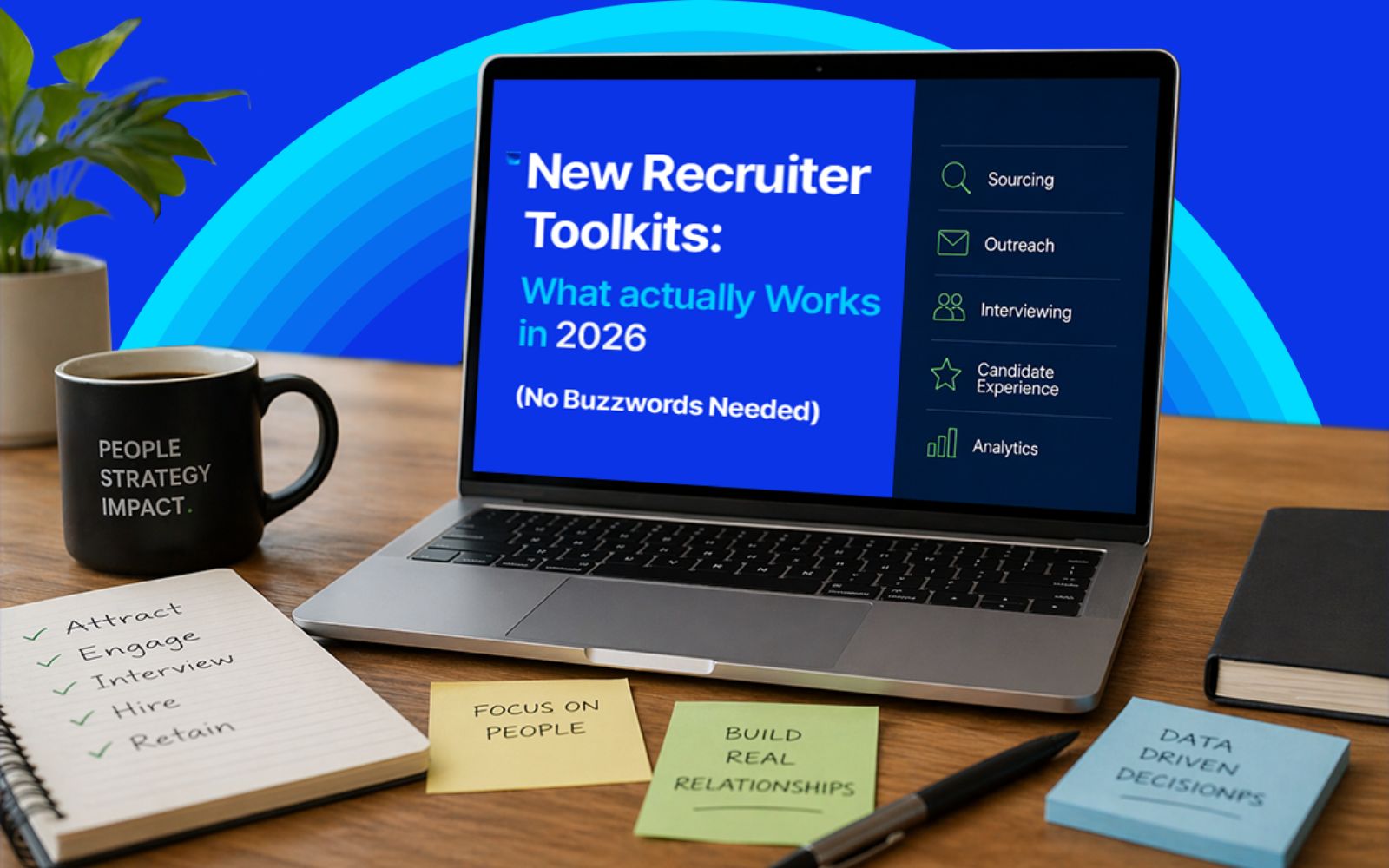
New Recruiter Toolkits: What Actually Works in 2026 (No Buzzwords Needed)

Hiring Gen Z: What Today’s Fresh Grads Want From Employers
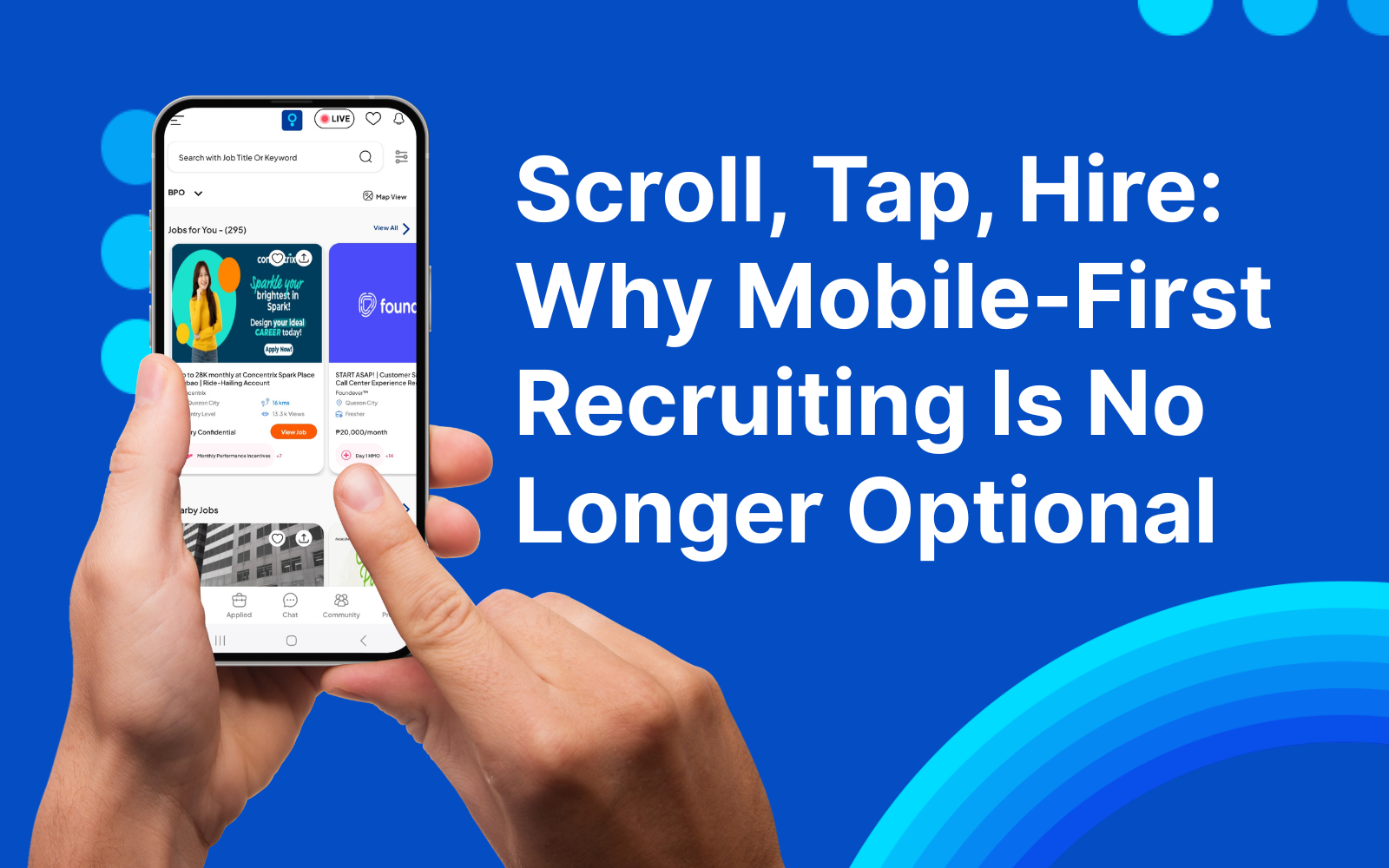
Scroll, Tap, Hire: Why Mobile-First Recruiting Is No Longer Optional


We will validate your hiring details with our partners
and process your voucher shortly

